

Everything you need to know about multi-spring mechanical seals
Everything you need to know about multi-spring mechanical seals
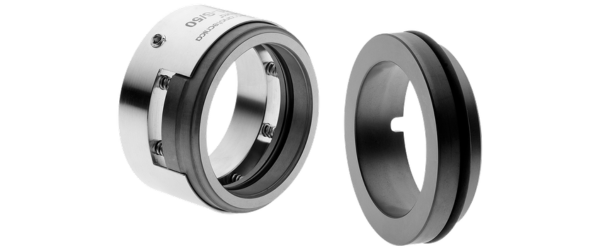
When designing and selecting a mechanical seal, not all solutions are equivalent. There are different types, each with specific design characteristics that determine their operational behavior and suitability for various industrial applications. Among these, multi-spring mechanical seals play a prominent role, with a design that clearly distinguishes them from single-spring solutions.
Understanding what sets them apart is not just a technical matter: it means being able to make a more informed assessment of which sealing solution is best suited to your operational needs.
In this article, we at Meccanotecnica Umbra will take an in-depth look at everything there is to know about multi-spring mechanical seals: what they are, how they work, what materials they’re made of, and the applications in which they’re used.
The operating principle of multi-spring mechanical seals is based on distributing the sealing force across the sealing surfaces among several small springs arranged along the circumference of the seal. Unlike single-spring seals, in which a single element provides the contact pressure between the rotating and stationary surfaces, in multi-spring seals this task is performed by a set of springs working in parallel.
The result is a more uniform and balanced force on the sealing faces, with a lower risk of instability or uneven wear. This makes them particularly effective under dynamic operating conditions, such as high rotational speeds or pressure fluctuations over time.
Multi-spring mechanical seals consist of various components, each made from materials selected based on the specific application and expected operating conditions.
The sealing faces, the heart of the system, are generally made of graphite (carbon), silicon carbide (SiC), or tungsten carbide (WC), and are often combined to optimize friction performance and wear resistance.
The springs are typically made of stainless steel, but in particularly corrosive environments, special alloys such as Hastelloy or Inconel are used.
The metal parts follow the same principle: stainless steel in most cases, high-performance alloys in the most critical applications.
The secondary seals, that is, the elastomers, vary between NBR, EPDM, FKM, and FFKM depending on the operating temperature and the fluid to be contained.
It is a custom-built system: the selection of materials does not follow a standard approach, but is tailored to the specific needs of each application.
The main advantage of multi-spring mechanical seals is the uniform distribution of load across the sealing faces. Having multiple springs working in parallel ensures that contact between the surfaces is constant and balanced, resulting in more even wear and greater long-term stability compared to single-spring solutions. This characteristic makes them particularly reliable under dynamic conditions: high rotational speeds, vibrations, and pressure fluctuations are factors that a multi-spring seal handles more effectively.
In addition, these devices often feature a more compact design, which makes it easier to integrate them into small spaces without compromising performance.
The overall result is a seal that offers greater durability, requires less maintenance, and provides more predictable performance throughout the system's operational life.
Like any technical solution, multi-spring mechanical seals also have certain limitations that are important to consider during the selection process.
The presence of multiple small springs makes them more susceptible to contamination: in environments with fluids containing solids, particles, or substances that tend to cause scaling, the springs can become jammed, compromising the seal’s functionality.
The more complex design compared to a single-spring seal is also reflected in costs and maintenance, which tend to be higher. This is not necessarily an absolute disadvantage, but it is a factor to consider in light of the operating environment and the expected service life of the system.
Multi-spring mechanical seals are ideally suited for use in all industrial applications that require continuous operation, long-term reliability, and the handling of relatively clean fluids. They are a common choice for industrial pumps in the chemical, food, and water sectors, where operational stability is a top priority.
Water treatment is one of the most common areas of application, as are chemical processes involving fluids at varying pressures or high rotational speeds. In these contexts, the ability of the multi-spring seal to maintain uniform contact pressure on the sealing faces translates into a tangible benefit in terms of service life and a reduction in unplanned downtime.
When selecting a multi-spring mechanical seal, choosing a manufacturer with extensive experience in custom design makes all the difference in terms of the system’s performance, service life, and reliability. Every application has its own specific characteristics, fluid, pressure, temperature, rotational speed, and a custom-designed seal addresses these variables much more effectively than a standard solution.
At Meccanotecnica Umbra, we design and manufacture custom multi-spring mechanical seals tailored to each customer’s operational needs. Whether for industrial pumps in the chemical, food, or water sectors, water treatment plants, or processes involving fluids at variable pressures and high speeds, we are able to develop the most suitable configuration, from material selection to system geometry, to ensure long-term reliability and operational continuity.
Do you need a multi-spring mechanical seal for your application? Contact our team: together, we’ll find the solution that best fits your needs.


MeccanotecnicaUSA, inc.
Seguin Rd. Suite F - Pharr
TX 78577 - U.S.
Phone: 01 956 782 2400
SALES OFFICE
41650 Gardenbrook Road, Suite #110
Novi, MI 48375
Phone: 248-347-0606 ext. 224
Email: usa@mtu-group.com
Privacy / Cookie policy
F.A.Q.
© 2026 - Meccanotecnica Umbra S.p.A.
Designed by Co.Mo.Do Comunicare Moltiplica Doveri
Developed by NUR Digital Marketing
